

The Lee Method™️
My 5x week progressive overload training program that gave me my life back and reminded me who the f*ck I am

Hi everyone!!! After probably around 350+ DM’s and comments on Instagram, I’m so excited to finally share with you The Lee Method™️!
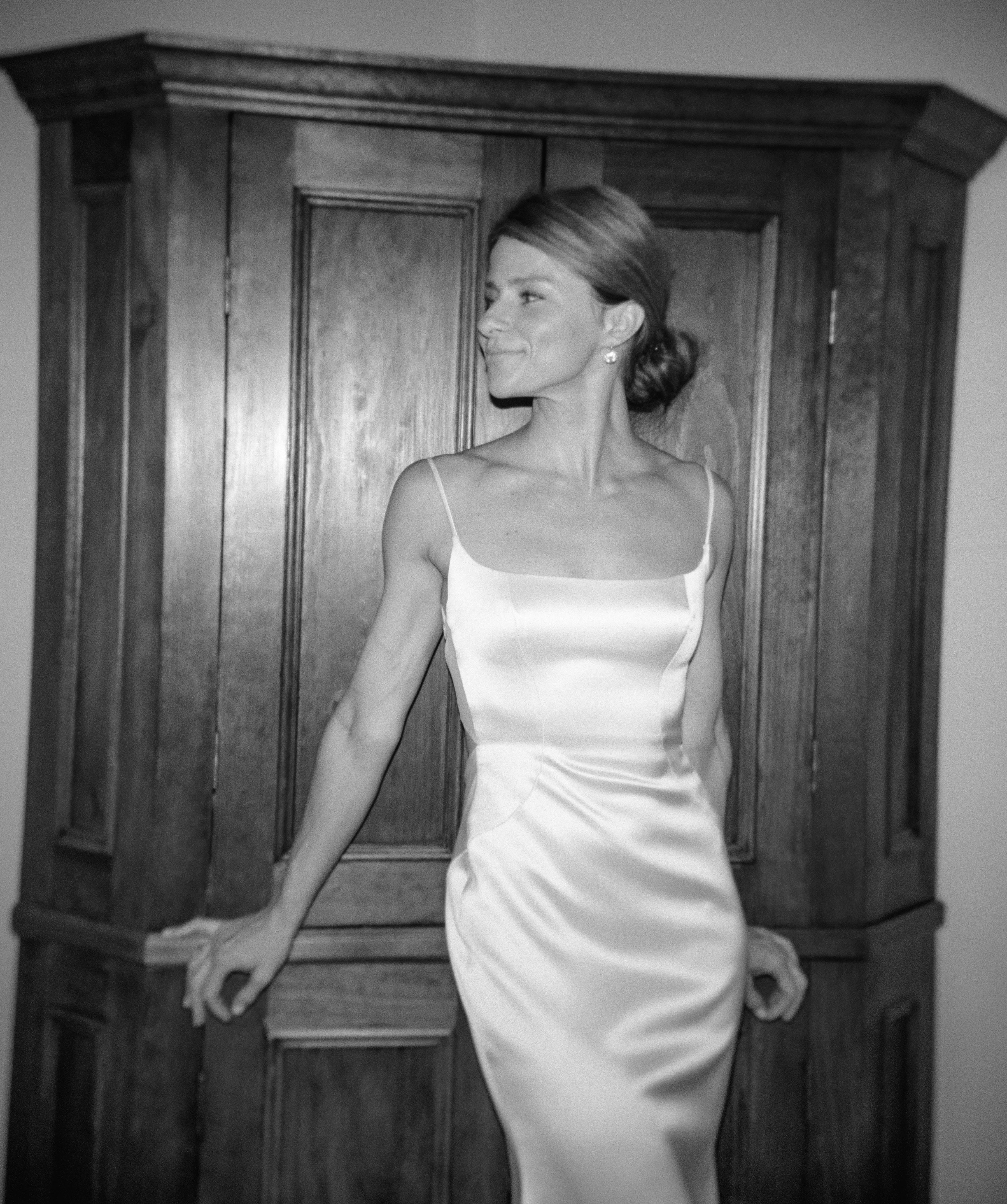
The Lee Method™️ is my progressive overload training regimen that I developed to get into the best shape of my life.
By following this plan, I gained 2 pounds of muscle and lost 1 pound of body fat in three months. I am toned for sure—but that’s not always an indicator of health. You know what is? How I feel—and I feel freaking amazing. Sustained energy every single day. I jump out of bed at 5 in the morning without an alarm. I sleep soundly through the night. I don’t have a 3 PM energy slump, and I am fueling my body with beautiful, protein-rich foods (and still having ice cream every night!)
How I show up in the gym lays the foundation for how I feel about my life. I’ve never felt so confident and capable, strong and sexy. I truly believe that how we feel about ourselves radiates outward, sending ripples through every facet of our lives. Choosing to invest in ourselves spills over into our work, our relationships, our friendships, and our creativity. And for me, it all starts in the gym.
My plan has made me feel amazing, and I want to help other women feel amazing too.
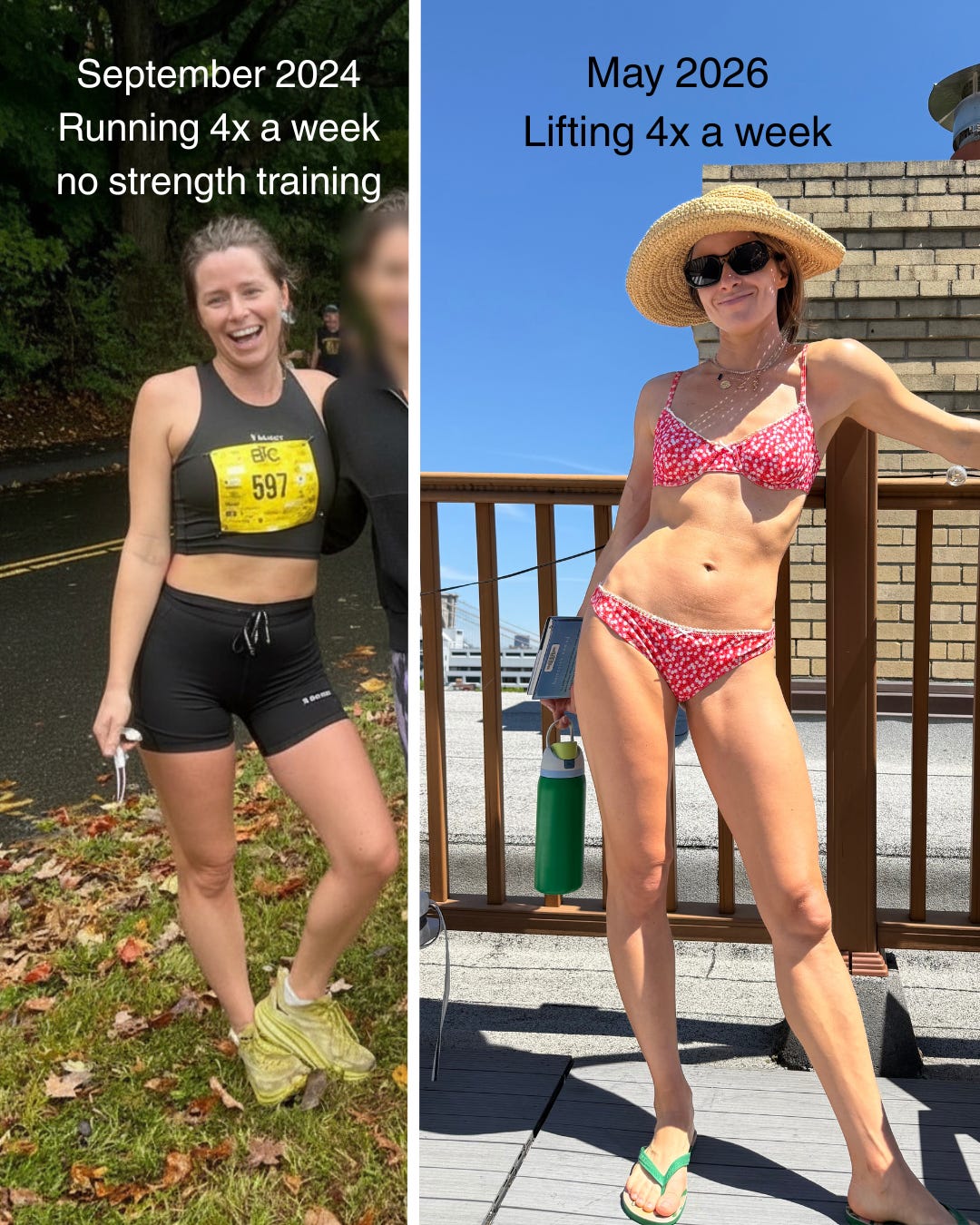
My plan utilizes progressive overload training, the best way to build muscle. Progressive overload is the only way to keep building muscle—without it, you plateau. Most people, especially women, do strength training totally wrong (if they even do it at all!): they stick to 2 to 8 pound weights for life out of fear of getting “bulky,” and never increase them.
What is progressive overload training?
Progressive overload training involves gradually increasing weights, reps, or sets over time to build muscle, improve endurance, and prevent plateaus.
Why we lift
I feel incredibly strong, and my posture has never been better (yes, even as a 200HR yoga certified teacher). Reaching for the groceries from the backseat of my car at odd angles—carrying them blocks to and from my apartment—has never been easier. My arms are as toned as they’ve ever been, and wearing a bikini doesn’t require a second thought.
But wait… muscles aren’t just for vanity; they are literally saving our lives.
As soon as women turn 30, their muscle density begins to decline1, with the body losing up to 3-5% of its muscle mass per decade. This sets the path for a plethora of pain and diseases down the road. I believe that maintaining lean muscle mass, especially as a woman approaching her 40’s, is the single most powerful defense against the impending age-related decline in metabolism2, bone density3, and hormonal health4. This ensures we enter midlife resilient, metabolically active, and completely independent, without needing help to lift the groceries at fifty-seven.
In other words, building muscle is one of the best things we can do (that’s in our power) to help us live longer, live stronger, and avoid much of the disease and ailments that come with age.
Getting older is inevitable, but it doesn’t have to suck.
My best friend and I said we wanted to be our strongest in our mid-thirties—and I am proud to report that goal has come to fruition through steady, disciplined hours in the gym.
What is The Lee Method™️?
A complete progressive overload training program you can do at home or in the gym. It entails five active training days per week: four days of strength, one day of cardio, and two full days of rest, ideally back-to-back.
Who am I?!
I’m Lee Tilghman, and I’m a wellness lover and practitioner who has been obsessed with wellness for 18 years. I am not a certified personal trainer, nutritionist, or doctor—I'm a lady who got really, really into progressive overload after taking a long break from being in touch with the side of herself that loves movement and athleticism. I’ve done a lot of research (and a lot of trial and error) along the way. Everything in this post is my own experience, on my own body. Please check with your own doctor before starting anything new, especially if you have any injuries or pre-existing conditions.
Let’s talk about body recomp
Body recomposition—the process of losing body fat while simultaneously building or maintaining muscle—is becoming increasingly popular as people recognize one of the biggest downsides of rapid weight loss without strength training. With the rise of GLP-1 medications, it’s become more obvious that losing weight often means losing muscle, too, if you’re not actively working on building it. (I’m seeing so much online about “Ozempic face”, but this also speaks to the broader loss of lean tissue across the body.) Body recomposition asks a different question entirely: not “How much do you weigh?” but “What is your body actually made of?” The goal isn’t just a smaller body; it’s a healthier ratio of body fat to lean mass.
Put simply, body recomposition is the process of gaining muscle and losing fat. You do this by strength training, keeping protein high, and a balanced diet near your maintenance calories, or slightly below, depending on your goals.
Now, let’s get to the workout!
The Lee Method™️
You Will Need
a wide range of dumbbells
a workout bench
a yoga mat
Keep In Mind
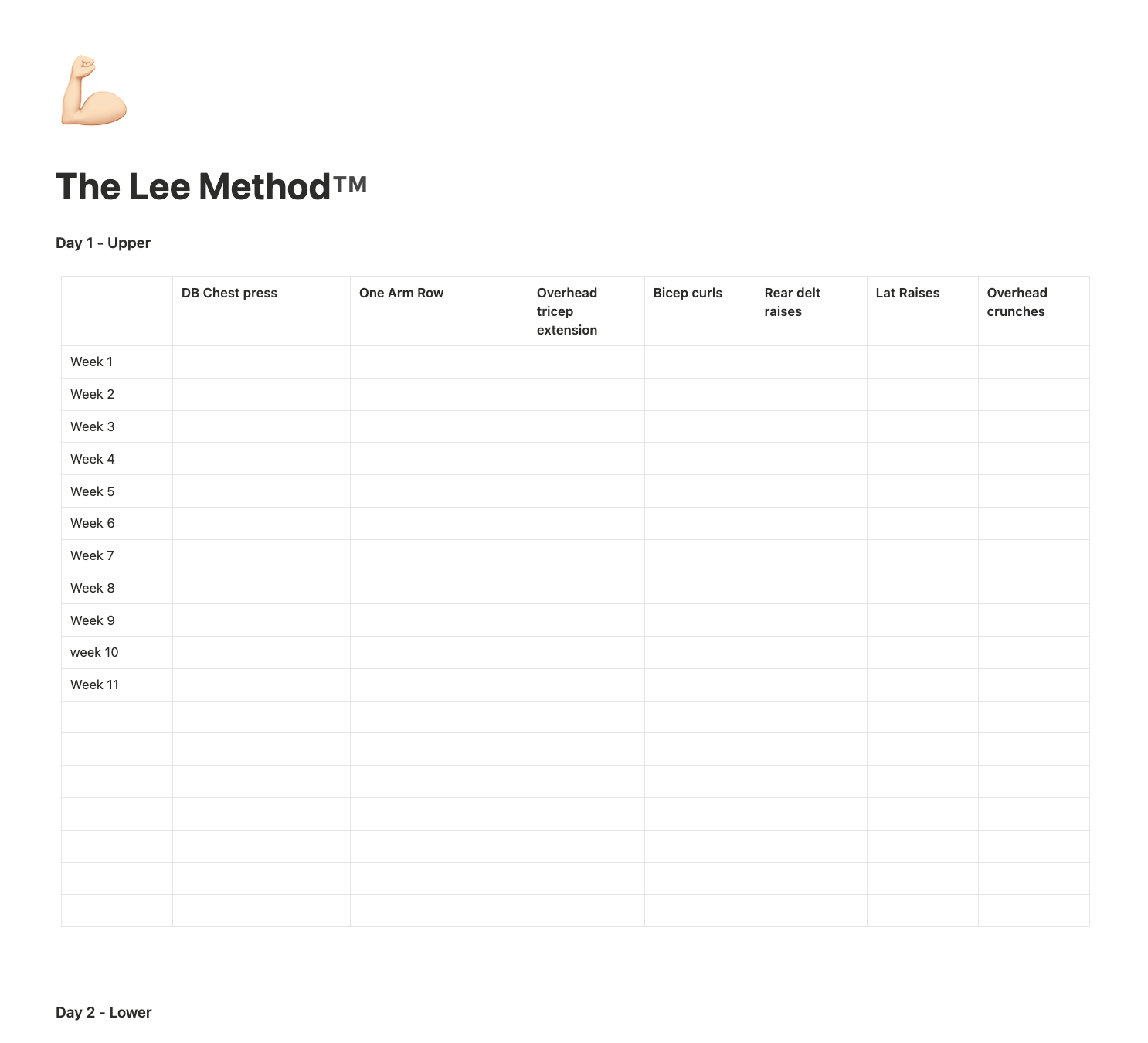
Keep track of your progress every day so you know when to progress. Note how many reps, how many pounds, and how it felt. I’ve built a Notion page to track your reps, weights, and progress, and you can use it too.
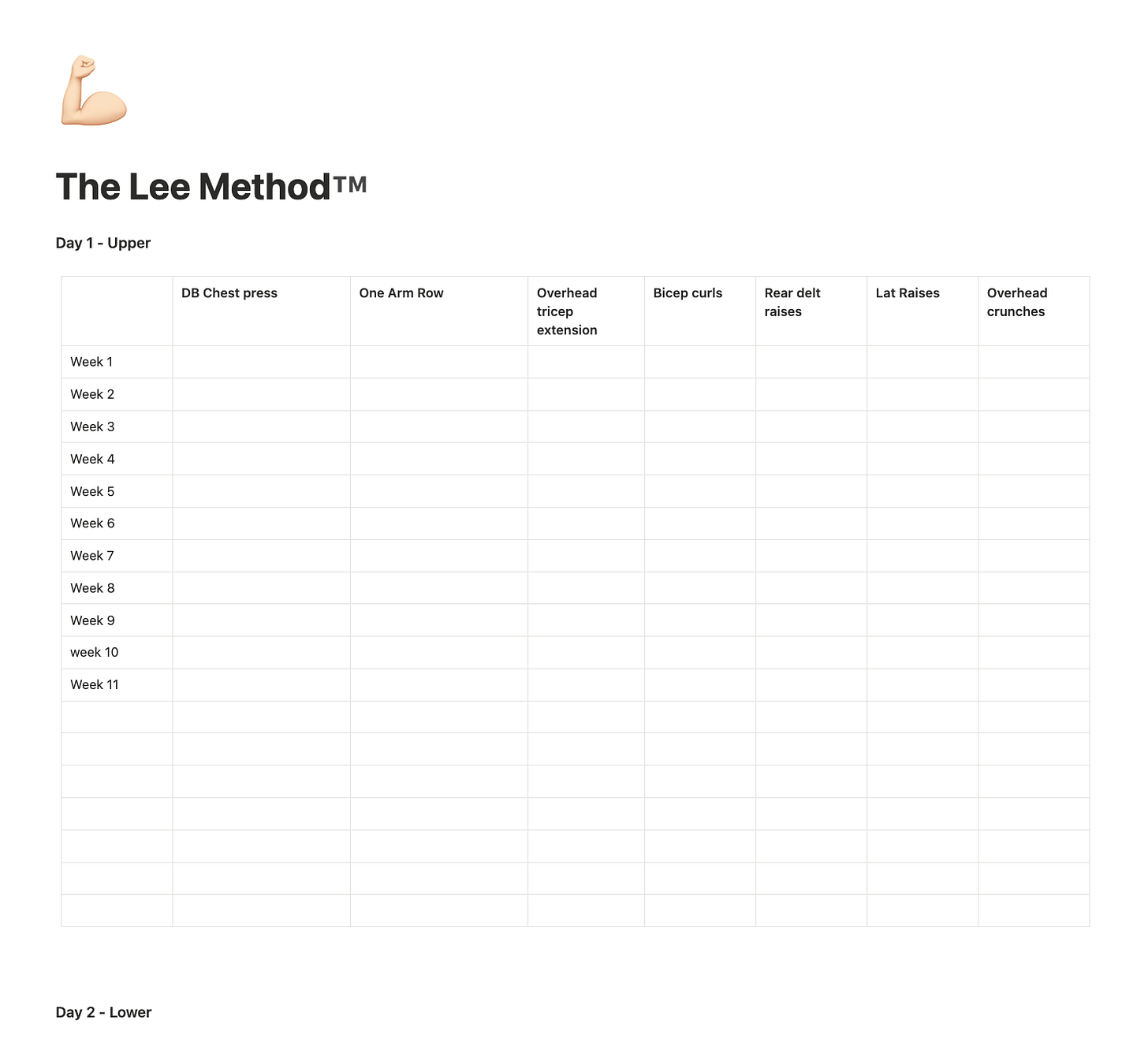
Track your progress with my free Notion page While going through my program, if you’re not sure what a movement is, Google it, watch a YouTube Short to see form, then film yourself doing it and compare form. Google is your friend! Do not let a lack of knowledge stop you from doing this! If you’re an experienced athlete, jump right in!
Try to get your two full rest days back-to-back. I truly believe two consecutive rest days signal to the brain to let you relax, allow the muscles to double-recover, and that way we are pumped and ready to GO by Monday morning!
Remember, this is a progressive overload training program. That means, each week you need to:
Increase Load: Add more weight.
Increase Volume: Add more sets or reps.
Increase Time Under Tension: Slow your tempo.
You decide the ways you want to challenge yourself, but don’t stay stalled (unless you are pregnant or are being told to by a medical professional)
DELOAD WEEK: It is imperative to take a deload week every 4-12 weeks of training or whenever your body is showing clear signs of deep fatigue. On deload week, you’re still doing the program, but only at about 30-50% of what you were lifting the week prior. For instance, I deloaded on week 10 and dropped my chest presses from 25 to 10 pounds that week.
RETURNING FROM DELOAD: The following week after deload, I picked back up to what I was doing before, or even slightly above, because I’d gotten proper rest!
Above all, know this: a lot of women are afraid of lifting heavy. They may feel like they need a fancy gym membership, a personal trainer, be afraid of getting hurt, or that they must be an “athlete” to get started. And to this I say: Do not let the fear of doing it perfectly stop you from doing it at all. Obviously, listen to your body and work on form, but just get started, don’t stay in fear.
Quick “which weight to start at” key: New to this? Start with a weight where the last rep of each set is hard. Already an experienced athlete? Use a weight where the last 2 reps are hard. Been at it a while? Push to failure by the last set.
Monday: Upper Body
Dumbbell chest press — 3x10 @ 25 lbs
One arm row (each side) — 3x10 @ 30 lbs
Overhead tricep extension — 3x12 @ 15 lbs
Bicep curl — 3x10 @ 15 lbs
Rear delt raise — 3x10-11 @ 10 lbs
Lat raise — 3x10 @ 10 lbs
Overhead crunches — 3x10 @ 30 lbs
Tuesday: Lower Body
Romanian dead lift — 3x12 @ 50 lbs
Bulgarian split squats — 3x11 @ 50 lbs
Weighted hip thrusts — 3x12 @ 50 lbs
Step-ups — 3x11 @ 50 lbs
Squats — 3x11 @ 44 lbs
Side plank hip thrusts — 1 min each side
Weighted glute bridge — 1:10 hold with 60 lbs on hips
Wednesday: Upper Body
Renegade rows — 3x20 @ 30 lbs
Diagonal dumbbell press — 3x8-10 @ 25 lbs
Tricep kickbacks — 3x10 @ 15 lbs
Rear delt raises — 3x10-11 @ 10 lbs
Lat raises — 3x10 @ 10 lbs
Serving platter — 3x10 @ 10 lbs
Dead bugs — 3x10 @ 15 lbs
Thursday: Lower Body
Squats — 3x10 @ 44 lbs
Romanian dead lift — 3x10 @ 30 lbs
Reverse lunges (each side) — 3x7-8 @ 30 lbs
Leg curl — 3x10 @ 50 lbs
Calf raises — high reps/time-based (I aim for 1:10) @ 60 lbs
Friday: Cardio
Sprints. I love to do my sprints outside on the piers, but you can also use a bike or an elliptical machine. Short bursts of 80-100% effort sprints are not only time-efficient, but it gives us all the cardiovascular health benefits without spiking cortisol. This method is based on the advice of Dr. Stacy Sims.
Warm up 5-10 minutes (jog)
8 sets of :25 seconds 80-100% effort sprints
1 minute of full recovery in between
Then you’re done!
But wait, there’s more.
PROTEIN: If your goal is to get lean and build muscle, diet is important! While doing progressive overload training, I made adjustments to prioritize protein, aiming to get roughly 105-120 grams per day, with my average being around 115g per day. This is on par with Dr. Stacy Sims’ recommended 0.7 to 1.1 grams of protein per pound of body weight daily.
WALKING: Throughout this process, I also made sure to hit at least 10,000 steps per day, even on rest days. Undoubtedly, hitting this daily target kept my system working beautifully, and these long daily walks (sometimes short and broken into spurts, but most often I do 7K in the morning, 3k in the afternoon) have become my favorite way to clear my head before the day starts.
MEAL TIMING: As soon as I started lifting heavy, I noticed an increased need to eat a little something in the morning after my walks and before my strength training session. Most often, I enjoyed a piece of fruit or a piece of toast with butter (or a Dr Natazia zu Stolberg banana muffin) to give me energy, then enjoyed a full protein-forward breakfast of either my protein pancakes or 3 scrambled eggs and toast immediately after completing my workout.
If you have any questions, let me know. I’m so excited to share my routine, and I can’t wait to hear how it goes for you.
With love and dumbbells,
https://womenshealth.gov/sarcopenia
https://www.massgeneral.org/news/article/why-muscle-mass-matters-and-how-to-keep-it
https://functionalmedicinecoaching.org/podcast/stacy-sims-108/
https://lifestylemedicine.stanford.edu/strength-training-during-perimenopause/
62 chiming in. Thank you for the motivation and affirmation!
My profile pix is me after I water walked the shores of the beautiful Columbia River for about an hour last summer. My routines have not been as specific as Lee’s outline here, but please heed the call younger ladies. Weights is the #1 activity you should be doing your entire life. At my age and stage I can tell you that strength and flexibility makes all the difference in the world. I have more energy, more stamina, more strength, and am more fit than almost any woman younger than me who I know. My son is an ER nurse and tells me frequently: Keep it up, mom. Do not stop.
I’ve been lifting weights since I was 19. Was a body builder back in the day. Also was into the 1990’s fad of intense high impact aerobics (ugh). And then about a decade of obsession with hatha yoga in my 50’s! Throughout the years I stopped extreme exercising and picked up lifetime leisure activities. But always the weights! The weights have been the #1.
Yes to yoga mat with various dumbbells. Just adopt a mindset that for the rest of your life you’re going to care for your physical body. Don’t rush. Take it slow and develop habits.
These days my ‘get outside and move!’ is something I do everyday for at least an hour— hiking, long distance walking and including pushing my grandchildren in a jogger, neighborhood riding on my fat butt cruiser bike, swimming at aquatic center, and always evening weights and yoga pose stretching. I take 2 days off — 1 day mid week and 1 weekend day.
Do the weights! Your 60-something self, and your grandchildren, will thank you. 😊
Can we also have the lee method in writing/creating?😍